apple / spotify / pocket casts / overcast
It’s 🐝 yourself Friday! Yada yada yada, you get it. This month we have another long episode for another weird indie RPG. This time around is gonna be a shorter blog post, because I’m kinda busy. Sorry! If it makes you feel any better, the episode itself is even longer than last time, so there’s no shortage of me and Tess yapping if that’s what you’re into.
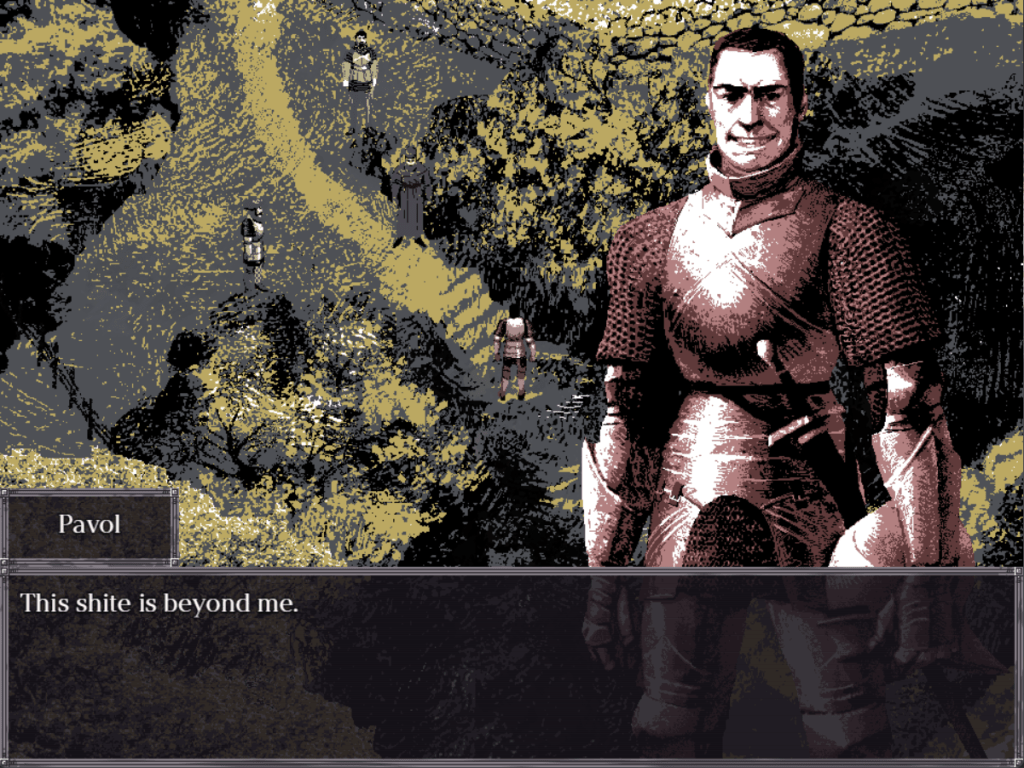
Felvidek is a complicated one for me. There’s very clearly a lot to love about this game: its visual style is incredibly striking and strange, its soundtrack has this anachronistic squealing electric guitar which is perfect for the messy tone, and its got such a unique and compelling setting that I can’t help but get sucked into it. Felvidek is all in on the historic part of historical fantasy. It takes place during the year 1451 in the Slovak Highlands, as the threats of the Hussites and Ottomans close in on the region of Felvidek, but the game revolves around a new threat from a strange cult that begins to surface from within. The way it represents this small and unique period of history and then continues to fantasize about it is so exciting to me. The lord of the castle, Jozef, speaks to our drunk protagonist Pavol about John Hunyadi and other nobles in the world (whose names are known by Tess and not by me). The Burgomeister will tell you in great detail about the qahwah trade in Ethiopia and its relationship to the cult of Zurvan. And everyone all over the region is eager to share their woes about the filth and death that covers their homes, their bodies, and their world.
And I did like it. I think it stumbles in some places — the battle system for example is decidedly uninteresting to me — but the game makes up for it with its sense of humor. It’s funny! Dryly, darkly funny, and it knows when to pull its punches and when to swing hard. What Felvidek thinks is funniest is the absurd and sad truth of who people are and what troubles them. Pavol is an alcoholic becoming close friends with a clergyman and that’s funny. His wife left him and then slept with other men in his bed, which is also funny. He drinks sour cream and porridge in the midst of battle to cure his ailments, which we see happen in first person perspective while soldiers bring down their swords on him. That’s funny! Pavol looks down at the corpses of soldiers who killed a young woman’s father in the woods, and thinks: “I am tired. When will it stop, all the killing?” and it’s like you’re suddenly sober for the first time in days. It’s an incredible talent, to set up this absurd tone for the world and then so consistently be able to pull you out of it for the grim realization of what the world actually is.
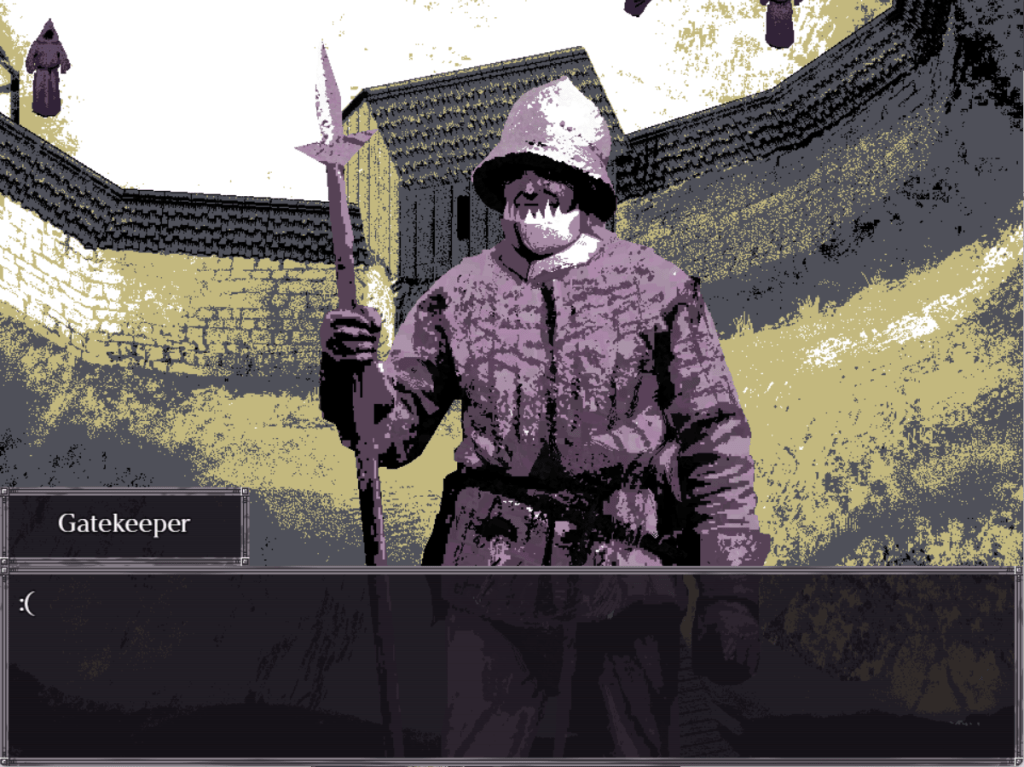
The problem is that exactly what it thinks is funny sometimes just doesn’t work for me. For the largest and most obvious example: there’s a Jewish man who lives in the woods and everyone refers to him as “The Jew” and he’s a moneylender who is constantly humiliated and attacked and he pays you an exorbitant amount of money to kill his attackers while living in a hut with a dirt floor. He joins your party, but only as a key item, and the game says “You’ve acquired a Jew.” His item description calls him “Stein Steinberg.” Hilarious…? I don’t know, but if you ask me, not extremely so. This, and some other small moments like this, is where the game starts to lose me.
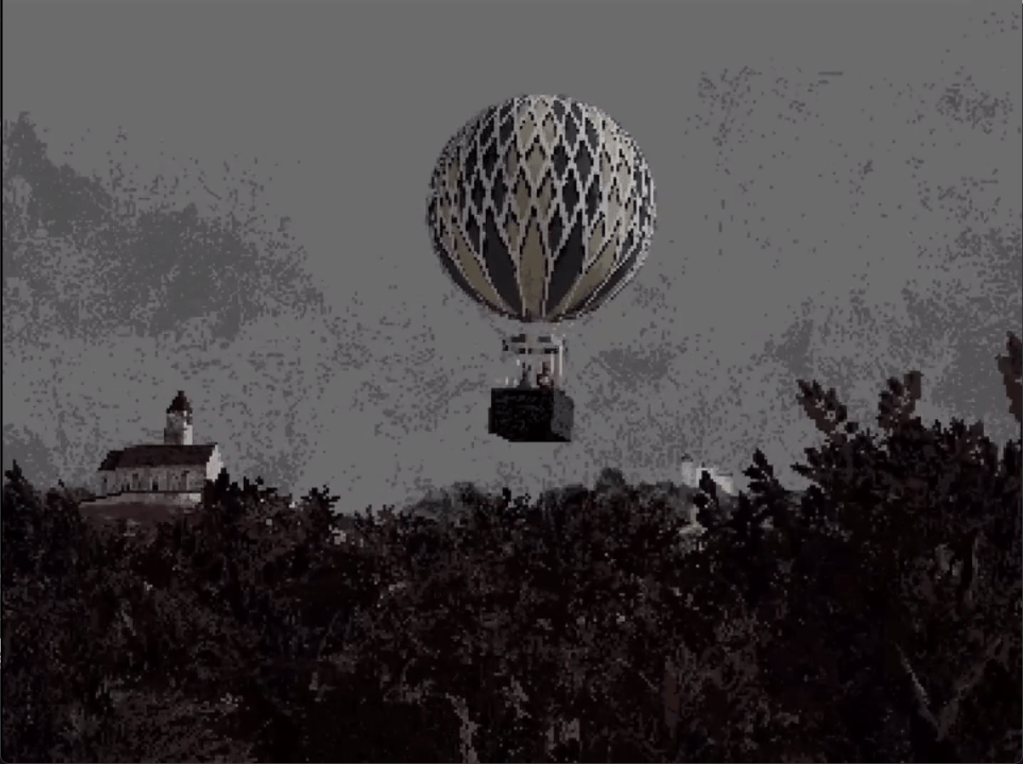
What works about the comedy in much of this game is its humanity. Pavol and Matej are funny because they are allowed to be human. Felvidek often is interested in the dirty truth of life, the smelly knight falling asleep drunk in his armor and two priests arguing in the middle of a brothel. Being human is absurd in and of itself, and Felvidek usually understands that. When you start to strip the humanity away from your characters, you not only alienate those people who would have otherwise liked your game, but you also embarrass yourself and lose what’s funny and truthful and good about it. That sort of honest sadness it is only capable of showing from the Catholic characters is the fire that makes Felvidek go. Felvidek is a hot air balloon, and when it puts that fire out it crashes.
Still: if you’re capable of getting past that, then I suppose it’s an aesthetic accomplishment. Tess points out, when talking about the game’s 3D cutscenes, the similarity to the PS1 era of JRPGs, and especially the moments in games like Final Fantasy 7 when we switch to a 3D cutscene and the visual fidelity is suddenly much better. I think this similarity is part of the secret sauce when it comes to this game. There is something almost nostalgic to me about Felvidek, even though I’ve probably never played anything else like it. Despite the dirt and the blood and the pain, there is something beautiful here, and though I don’t see myself playing it again, I will probably remember the feeling of listening to that twinkling guitar echoing in this grimy world for a long time.
Uhhhh. As far as podcast stuff goes. The next episode is going to be about CHAINED ECHOES, a really neat JRPG inspired JRPG(?). Soon after we decided to play this game, the developer actually released a big story DLC called Ashes of Elrant, so we’re hoping to cover that on the show too! I’m very excited about recording this one, and I think it’ll be a really fun episode.
This is also going to be the first episode we’ve recorded after the launch of the show, and I was hoping to open this episode up for questions! So, dear listeners and readers: if you enjoy our show and my blog, and you have questions about Chained Echoes and its DLC, please reach out! You can send questions or comments that you’d like to hear on the show to leavingthepartypod@gmail.com. If you happen to know me then you can skip the email but it will feel less professional and official that way, and we are of course professionals.
If we don’t have questions on the next episode, then we’ll be forced to punish you for your disloyalty and disobedience. You’ve been warned!
 leaving the party
Leave a comment