apple / spotify / pocket casts / overcast
Hello! It’s been a minute. How are you? What a lovely answer, I assume! It’s 🐝 yourself Friday and wouldn’t you know it, the Leaving the Party podcast is back. Did you miss us? We’re coming back with a sort of weird episode and a very lovely guest, the very beautiful Yvonne! She’s my girlfriend 🙂
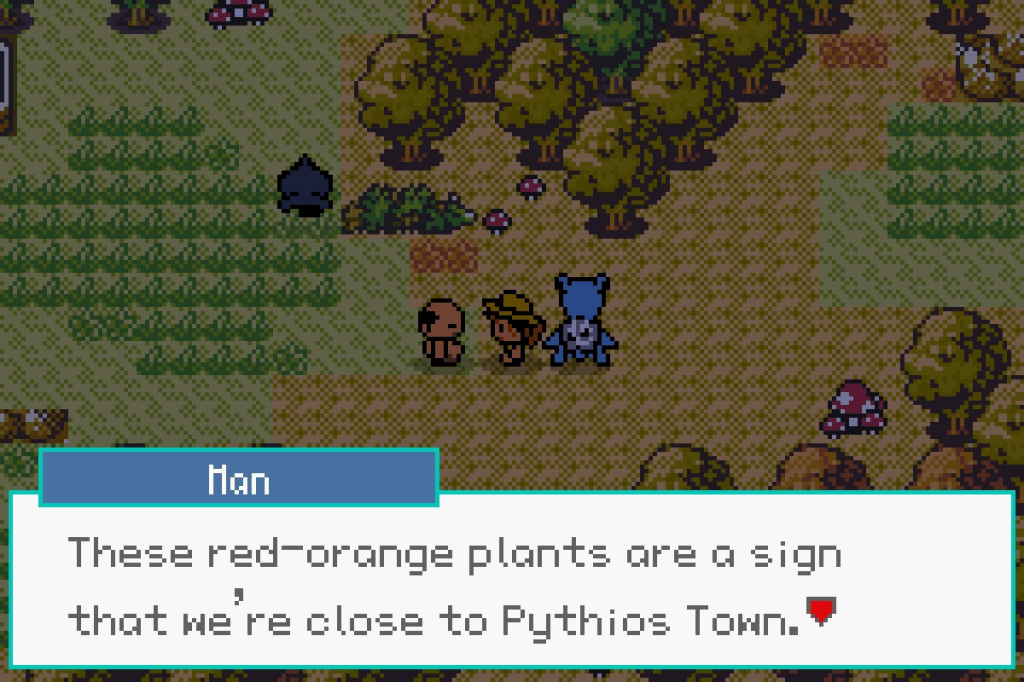
I say this episode’s sort of weird because there’s a couple things we’re doing here. Ostensibly, the thing we came here to talk about was Pokémon Lazarus, an incredible romhack of Pokémon Emerald by Nemo622 with help from many others in the romhacking community. It’s genuinely a beautiful little game, and end of last year our whole friend group was playing it, excitedly sending screenshots of our teams in group chats every time we beat one of the eight gym leaders. But we also thought: if we’re gonna record this podcast about a Pokémon game, we should do it in such a way that we never have to talk about a main series Pokémon game again. So this episode is not just the Lazarus episode, it’s also “The Pokemon Episode.” This kind of ended up divided into two parts: the first half, roughly, is about Pokémon as a whole and as a brand, one of the most successful media properties in modern history. We talk about what it is, what it means to us, and what is wrong with it (and us) such that we now live in a world where it pisses us all off so much, all the time. It’s only AFTERWARDS that we really get into Pokémon Lazarus, a fanmade Pokémon game that genuinely excites us!
Lazarus is what we call a “total conversion” romhack. Total conversion here means that it takes the engine, structure, and mechanics of Pokémon Emerald and totally reimagines it from the ground up: all new assets for almost the whole game, new music, a new region called the Ilios region, new Pokémon from later in the series and a new visual style. Lazarus takes on a sort of Gameboy Color-era art style, but updated and modernized with inspiration from the Gameboy Advance era the game is built upon. And we’re happy to say in this episode that Lazarus is a rare and incredible accomplishment, a full game built using the bones of Emerald, yet still deserving of consideration as its own entry in the series nonetheless.
What strikes me about Lazarus is its sincere interest in the world it takes place in, and that goes from simple things like an attention to detail in the design of the world to a more complex thematic content about the place of Pokémon as wildlife, and what wildlife conservation means in the world of Pokémon. You can find Nemo as an NPC in Lazarus, and when you speak with them they thank you for playing and tell you that they hope it’s got you thinking about biology and wildlife, the reason they made this game in the first place. The world is always portrayed just as the game itself is, with a certain straightforwardness characteristic to this era of Pokémon, where everybody speaks in no uncertain terms about what they know and what they believe about the cohabitation of people and Pokémon. The difference between the main series games and this one is a more academic interest in these questions that more directly draws connections to our relationships to wildlife in the real world.

An idea that recurs throughout Lazarus from the beginning to end is this biological concept of “lazarus taxa,” species of animals which are believed to have been extinct and then are rediscovered later, either as a currently living creature or as a creature out of time in the fossil record. This is the major point of study that your character follows as a university student during their adventures in Ilios, and the area of study your paleontology professor sets you upon at the start of the game. Throughout Lazarus, you will find extinct and mythical Pokémon in the wild during your adventure that would typically be impossible to catch without resurrecting a fossil. Ilios is a place is where the past is in a constant state of being exhumed, both in its ecology and in its culture. You will find monuments, temples, statues, and people all across Ilios waiting to tell you about the myths and histories of their world and, usually more locally, their cities. The Tropius statue in Port Pello will give you a short myth about how a Tropius and its trainer turned a barren land ruined by war between city-states to a blooming forest. Another student and friend, Niko, will tell you about the statues of a mighty king and a humble poet, and how the kings greed caused his statue to be overgrown and worn down. A complete fossil of Tyrantrum can be found, 72 million years old, in front of the wildlife conservation facility. And now, creatures believed to be extinct live and breathe on the routes and in the wild, perplexing the world and tantalizing those who would exploit it. It’s a region full of tributes to the past, creating an environment that feels full of history and culture without ever sacrificing the simplicity that makes these games so approachable.
I said earlier that Lazarus was built from the bones of Emerald. In this sense, Pokémon Lazarus is itself sort of a lazarus taxon too, having revived a generation of Pokémon games that many people like me once believed to be long extinct, creating an experience consistent with the way it once felt to play Emerald for the first time, with much of the same tone, formula, simplicity, and focus, never breaking the feeling of that classic Gameboy Advance era of Pokémon.
I mention in the episode that there tends to be an attitude among fans of many Nintendo games that Nintendo won’t take these games seriously, and so we have to do it for them. This is something you’ll see a lot in circles like Super Smash Bros. Melee, where an incredibly dedicated community has decided on a competitive ruleset and built a modern fighting game out of the bones of a party brawler. This attitude exists within Pokémon romhacking as well, with a plethora of difficulty hacks like Radical Red that begin to resemble competitive Pokémon exercises. I need to clarify here (like I do in the episode) that this is not necessarily a bad attitude to have! Both of these examples are moments where a community has created something truly great and transformative, alchemy-like, out of a game that was not necessarily made for what they wanted from it. But there is also some magic in the consistency of something like Lazarus, which has managed to become a beautiful and competent Pokémon game by staying true to the first principals of what made those games good in the first place. Nothing is too complicated or overwrought, everything is charming and interesting and fun, finding and catching new Pokémon is always exciting, and the world is populated by good people just like you doing much the same. It has nailed the tone of the original 3rd generation Pokémon games to a T, and stayed true to the core fantasy of the series of games: one where you become stronger through your bonds with your Pokémon in much the same way that the world itself becomes stronger through caring for the creatures who live in it, people and Pokémon alike.
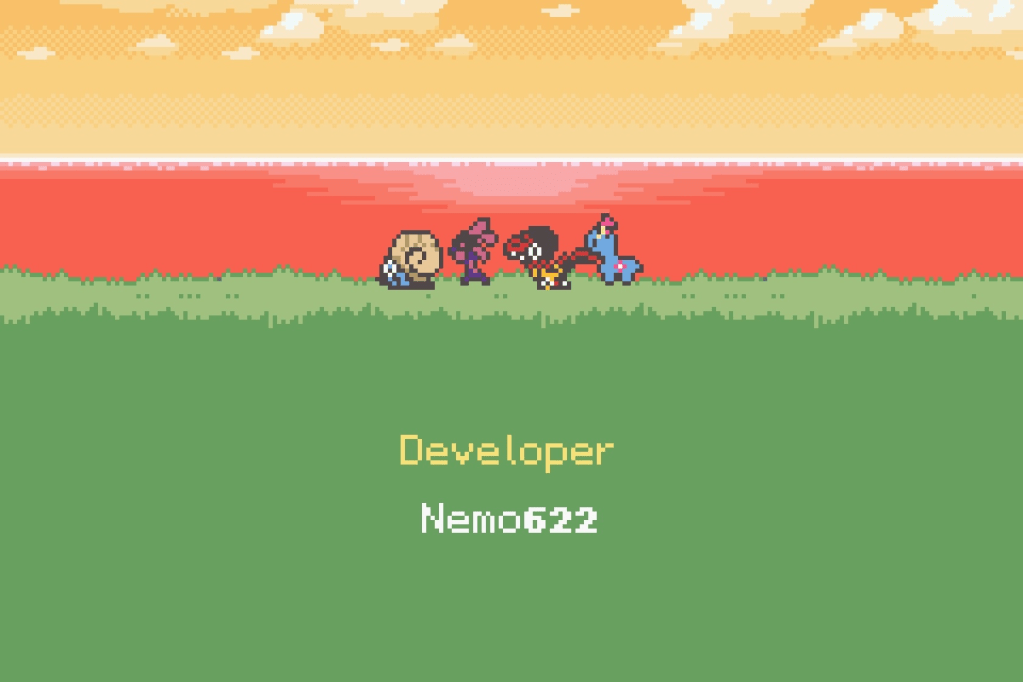
At the end of this episode, we also spend some time introducing the newest yearly Leaving the Party tradition: the Annual Leaving the Party Awards Ceremony Awards: Huge Panic at the Heart Throbbing School Trip! If you’re a keen reader, you might realize that the first half of this is an acronym for the ALPACAs. These are just some awards we’re gonna give out every year to games that we particularly liked (not even necessarily games that came out this year lol). Maybe in the future, we’ll do a whole episode about this and we’ll have physical awards to mail out; we certainly have some ideas. For now, it’s just a brief little discussion where we shout out some games that made us excited this year. I don’t want to spoil all of our choices, but because I can’t help myself I’ll just say this: Shoutout Of the Devil. that game whips cant wait for the next episode
Alright, I think that’s all for this post here. Next episode, this time for real, is going to be Chained Echoes. I know we’ve said that before but we mean it this time. I’m really excited for this one, so look forward to it hopefully by the end of next month! Love you! Happy 🐝 yourself Friday!
PS: the wildlife conservation facility you can repopulate with Pokémon that you catch — and the little habitats they appear in — is such a good idea that I think it belongs in every single Pokémon game. Just like Pokémon who follow behind you in the overworld. It’s the smartest thematic move the Pokémon series has made in a while, and the Pokémon series didn’t even make it!





 leaving the party